What Is a Teaching Portfolio? A Clear Guide for Independent Tutors
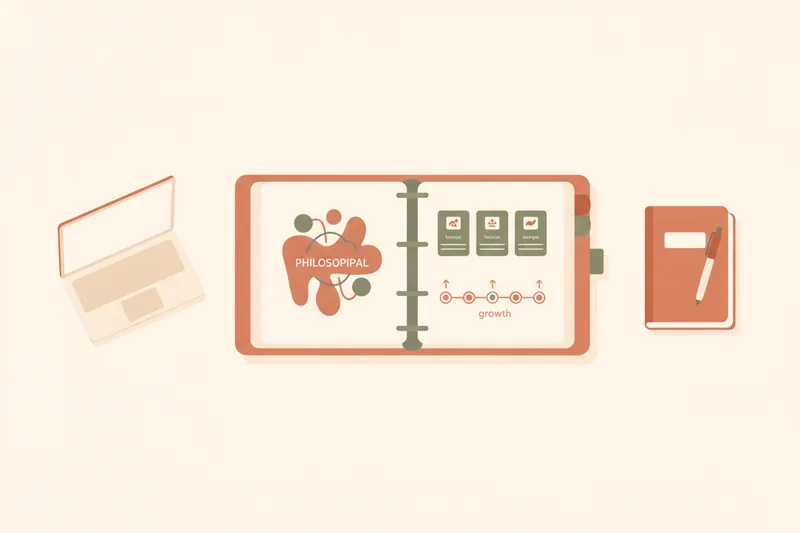
A teaching portfolio is a curated collection of evidence — a philosophy statement, lesson samples, proof of student growth, and a record of ongoing development — that documents how you teach and what difference it makes. It differs from a resume, which lists what you are qualified to do, and from a folder of saved lesson plans, which records what you taught. A portfolio is built to show the quality and direction of your practice, not just the fact of it.
What a Teaching Portfolio Actually Is
A teaching portfolio is a deliberately chosen set of materials and short reflections that, together, show the quality and trajectory of a teacher's work. It is not a storage folder: every item in it earns its place by demonstrating something — an approach, a result, a direction of growth — rather than simply existing because it was produced at some point.
Its purpose is to answer a question no certificate or transcript can: what actually happens when this teacher works with a student, and is it improving? For an independent tutor, that question matters to a prospective student deciding whether to commit to a course of lessons. For an exam-prep instructor, it matters to a parent who wants to see structured, visible progress rather than reassurance alone. A teaching portfolio answers with evidence instead of description.
How a Portfolio Works as Evidence of Your Practice
A portfolio earns credibility through three connected pieces, not through volume.
A teaching philosophy statement explains the reasoning behind your choices — why you favor a communicative approach over drilling grammar rules (an approach centered on real-life communication and meaningful use of language rather than rote memorization of rules), how you handle correction, how you pace a lesson for a nervous beginner versus a confident intermediate learner. It gives the rest of the portfolio a frame: the reader understands why a given material or method appears at all.
Evidence of student growth is the part that actually proves something. A single piece of student work shows a snapshot; paired work — an early sample next to a later one on the same skill, say a speaking recording or a writing task — shows change. That pairing is what separates a portfolio from a scrapbook.
Professional development goals round it out by showing where you're headed, not just where you've been. Development doesn't only mean a course certificate; it can mean mentoring another teacher, observing a colleague's class, attending a conference session, or simply a documented change in method after reflecting on what wasn't working. Naming a current goal, rather than listing past training, is what makes this section read as ongoing rather than finished.
What Belongs Inside a Teaching Portfolio
Three kinds of material do most of the work.
Sample work artifacts are the materials you actually use with students — a worksheet you designed, an assessment rubric, a feedback form, a recording of a speaking task. These show your day-to-day craft, not just your intentions.
Lesson samples should be a small, representative set — three to five lessons that each show a different strength, such as one for a complete beginner, one for exam preparation, one for a small group — rather than an archive of everything you've ever taught. Choosing a handful deliberately is what makes them readable as evidence rather than clutter.
Letters of recommendation carry weight when they are specific: a parent describing a measurable change in their child's confidence or exam score, a colleague describing how you handled a difficult placement, rather than general praise. A short, concrete note from a real student or parent does more work than a formal reference that could apply to anyone.
Online vs. Physical Portfolio Formats
Neither format is more legitimate than the other; the right one depends on how you teach.
A physical portfolio — a binder or printed folder — works well when you meet students or institutions in person, or when an interview setting rewards something tangible to hand across a table.
An online portfolio, built as a simple website, a shared folder, or a PDF, suits teachers who work remotely or across time zones, since it can be sent with a link and updated without reprinting anything. It also handles media that paper can't: an audio clip of a student's pronunciation before and after a few months of practice, or a short video of a speaking task, both of which are genuinely useful evidence for language teaching specifically. Whichever format you choose, keep it current — an outdated portfolio undercuts the growth it's meant to show.
A Concrete Example of a Well-Structured Portfolio
A well-structured portfolio tends to follow a predictable shape, whatever the format.
A well-structured portfolio typically contains, in this order: a short introduction — who you teach, what levels or exam tracks, and in what setting. Next comes the philosophy statement — a page, not an essay — explaining your approach in plain terms. After that sit three or four lesson samples chosen for range rather than volume: perhaps a beginner conversation lesson, an IELTS speaking-practice lesson, and a grammar-focused lesson for a younger learner. Following the lesson samples comes the growth evidence: one or two paired work samples showing a student's progress on a specific skill over a defined period, with a sentence or two of context rather than raw files alone. Then a short section on current development goals — what you're working on now, and why. The portfolio closes with two or three short letters or notes from students, parents, or colleagues. That order — intro, philosophy, samples, evidence, goals, endorsements — moves the reader from who you are to what you actually produce, which is the order a portfolio is meant to argue in.
Portfolio vs. Resume vs. Lesson Plan Folder
A resume lists qualifications, dates, and roles in a fixed, chronological format. It tells a reader what you're credentialed to do, but nothing about how you do it or whether it works. A portfolio does the opposite: it's selective rather than exhaustive, and it's built around demonstrating quality and change, not stating facts about your background.
A lesson plan folder is often confused with a portfolio because both contain lesson material, but the resemblance stops there. A lesson plan archive exists to help you teach again — it holds everything you've used, regardless of how well it worked, organized for retrieval rather than presentation. A portfolio is curated for an outside reader: it keeps only the lessons that illustrate something, pairs them with evidence of what happened when you taught them, and drops the rest. The folder answers "what have I taught"; the portfolio answers "how well, and how is it improving."
When a Portfolio Stops Being Useful
A portfolio stops adding value the moment it stops being current — a philosophy statement or growth sample from several years ago tells a reader about who you were, not who you are now. It also loses its point if it becomes exhaustive rather than selective: a portfolio with forty lesson samples reads as unreviewed, which defeats the purpose of curating one at all.
It's also worth being honest that not every situation calls for one. A student booking a single trial lesson rarely needs to see a portfolio; a quick conversation or a sample lesson usually tells them enough. A portfolio earns its keep when someone — a parent tracking a child's exam preparation, an institution reviewing an application, a student comparing tutors before committing to a package — needs evidence over time, not a first impression.