Deal with Difficult Students: Language Tutor Guide
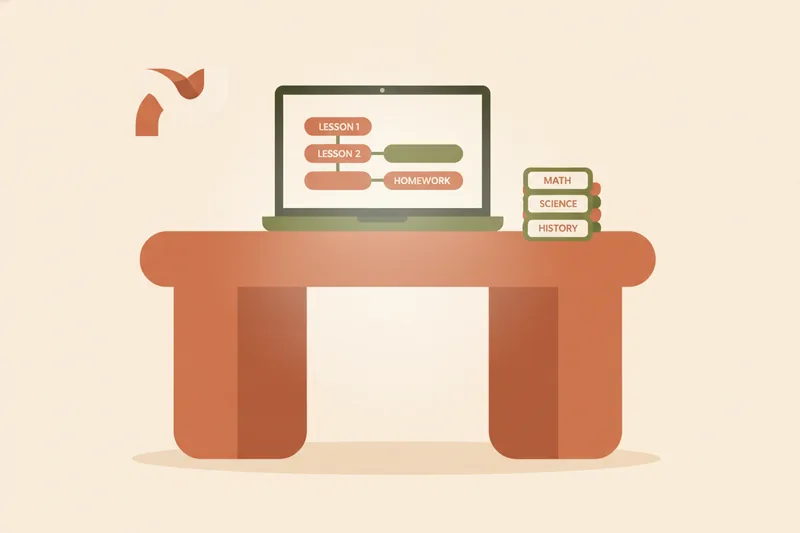
Most "difficult" behavior in language tutoring isn't a discipline problem — it's an administrative one. A student who cancels last-minute, stops doing homework, or argues about how many lessons they have left is usually reacting to unclear scheduling, unclear balances, or unclear expectations, not testing your authority. This guide separates genuine misbehavior from friction you can prevent, and gives you concrete ways to handle both, whether you teach teenagers, working adults, or exam candidates one-to-one or online.
What Makes a Student "Difficult"?
Classroom management — the practical work of keeping lessons structured, on-topic, and respectful — was built around groups of children in a shared room, where a teacher enforces rules against 25 students at once. Language tutoring, especially one-to-one and online, is a different environment: there's no peer audience to perform for, no bell schedule, and often a direct financial relationship between tutor and student or parent. So student misbehavior in a tutoring context rarely looks like classroom disruption. It looks like arriving late, going silent during a call, refusing to speak the target language, arguing about grades, or ghosting between lessons.
A workable difficult student definition for tutors: a student whose behavior consistently disrupts the lesson's progress or the working relationship, despite clear expectations having been set. That "despite clear expectations" clause matters — a student who reschedules constantly because your booking process is confusing isn't being difficult, they're navigating a system that isn't working for them. Much of this friction is preventable before it ever becomes a behavioral issue, which is the premise behind tools like Umvelo, built specifically so that scheduling, lesson balances, and materials are transparent enough that fewer situations escalate into something that feels personal.
Common Causes of Student Misbehavior and Disengagement
Before responding to a disruptive or disengaged student, diagnose first. Most student misbehavior in language learning traces back to a small number of causes:
- Motivation and disengagement — the student signed up for reasons that no longer hold (a trip that got cancelled, a job that no longer requires English), and the lessons feel like an obligation rather than a choice.
- External stressors — work deadlines, family issues, or exam anxiety that have nothing to do with you but show up as short temper or distraction during lessons.
- Unclear expectations — the student doesn't know how homework is graded, what "fluent" means as a goal, or how many lessons they've paid for, so they push back on things that feel arbitrary.
- Mismatched pacing — lessons that are too easy breed boredom, too hard breed frustration, and both look like "attitude" from the outside.
Treating all of these the same way — as discipline problems — usually makes them worse. A bored advanced student and an anxious exam candidate need opposite responses, not the same script.
Signs of a Struggling Student
Struggling and disruptive aren't the same thing, and conflating them leads to punishing a student who actually needs support. Watch for these struggling student signs:
- A sudden drop in homework completion, or homework returned rushed and incomplete after being previously careful.
- Increasingly short or one-word answers during speaking practice, especially from a student who used to talk freely.
- Changes in attendance — more lateness, more "something came up" cancellations, or requests to shorten lessons.
- Avoidance of a specific skill (writing, speaking, a grammar topic) that used to be neutral ground.
These disengagement cues are easier to catch when you have a record to compare against rather than relying on memory. Some tutoring tools address this by giving students their own login to track logged progress or view assignments, which surfaces engagement drops early rather than after several missed weeks. The point isn't the tool — it's having any structured trail of homework and attendance so a real pattern is visible instead of a vague feeling that "something's off."
Discipline vs. Punishment: Setting Boundaries While Staying Empathetic
This is the principle everything else in this guide builds on. Discipline vs. punishment is the difference between a boundary that helps a student succeed and a consequence meant to make them feel bad. Punishment says "you missed your homework, so I'm annoyed with you." Discipline says "homework review is part of how this lesson works, so we'll spend the first five minutes on what you attempted instead of moving forward."
Empathy and boundaries aren't opposites — empathy is understanding why a student is late or unprepared; a boundary is still following through on what happens next regardless. A tutor who drops boundaries out of sympathy every time teaches students that boundaries are negotiable, which produces more of the same behavior, not less. Consistency and rules are what make boundaries feel fair rather than personal: if the policy on late cancellations is the same every time, for every student, it stops being a judgment call and becomes just how lessons work.
Rules and Strategies for Handling Difficult Students
Once the discipline/punishment distinction is in place, apply it consistently across the lifecycle of a lesson.
Before the lesson: setting expectations
State your rules in writing before the first paid lesson, not after the first problem: cancellation notice period, homework format, what happens with repeated no-shows. Written practical strategies beat verbal ones because they remove "I didn't know that was the rule" as a defense — for either side.
During the lesson: staying consistent
If a student refuses to engage, don't argue about it live. Redirect once, note it, and address it after the lesson rather than turning the session into a conflict de-escalation exercise in front of the clock. Consistency here means applying the same response to the same behavior every time, not adjusting your tolerance based on mood.

After the lesson: following up
Follow-up is where clear consequences actually land. A short message — "we lost 10 minutes to off-topic chat today, let's use the first few minutes next time to warm up properly" — is discipline. Silence followed by a sudden policy change is punishment, and it damages trust faster than the original behavior did.
Dealing with Difficult Adult Students
Adult learners rarely misbehave in the classroom sense; their friction shows up as resistance to correction, cancelled lessons blamed on work, or quiet non-compliance with homework they consider beneath them. Treat adults as collaborators in their own learning plan rather than as recipients of instruction — ask what they actually need language for, and adjust visibly.
Exam-prep candidates are a distinct case: their difficulty is usually anxiety-driven, not attitude-driven. A candidate who snaps at feedback close to a test date is often reacting to pressure, not to you. Direct, calm communication with students about what a mock score actually predicts helps more than reassurance alone.
Some adult students also show self-directed learning friction — they want to set their own pace, skip agreed material, or self-diagnose what they need practice on. Here boundaries matter as much as with any other student: you can accommodate preferences without abandoning the structure that makes lessons effective.
Difficult Behavior in One-on-One or Online Tutoring
In one-to-one tutoring dynamics, there's no group to absorb friction — every missed lesson, unclear invoice, or lost worksheet becomes a direct conversation between you and the student, which is exactly why it tends to feel personal even when it isn't. Online tutoring compounds this: platforms in this space are usually built either as marketplaces that match students with tutors, or as full course platforms, rather than as tutoring-management software focused on the ongoing relationship — so many tutors end up patching scheduling, payment tracking, and materials together with spreadsheets and chat apps, which is where most "difficult" situations actually start.
No-shows and last-minute reschedules
No-shows and rescheduling conflicts are rarely about disrespect — they're usually about a booking process that's inconvenient enough that students forget or avoid using it correctly. A calendar the student can see and act on themselves, with a clear accept/decline step on reschedule requests, removes most of the ambiguity that turns a missed lesson into an argument.
Disputes over paid, planned, or missed lessons
Rate comparisons vary — online lessons commonly run 10–25% cheaper than in-person tutoring across experience levels — and that gap alone can create tension if a student isn't sure what they're paying for or how many lessons remain. A visible lesson package balance, showing what's paid, planned, and used, prevents most of these disputes before they start; it's much harder to argue about "how many lessons are left" when both sides are looking at the same ledger.
Confusion over homework or materials
Materials scattered across email, chat, and shared drives create real confusion that looks like carelessness but isn't. Keeping homework and materials attached directly to the lesson they belong to, visible in a student portal the student can check anytime, removes the "I didn't know we had homework" excuse entirely — and with it, a surprising share of what gets labeled as difficult behavior.
FAQ
How do I handle difficult adult students without sounding condescending? Speak to the goal, not the behavior — connect a correction to the outcome the adult student stated they want (a job interview, a certificate), rather than framing it as compliance with your rules.
How do I tell a struggling student from a disruptive one? A struggling student's engagement drops gradually and they often still show up; a disruptive student is actively resistant despite clear expectations. Comparing homework completion and attendance over a few weeks usually makes the distinction obvious.
When should I end a tutoring relationship? When boundaries have been stated clearly, applied consistently, and the pattern still repeats — chronic no-shows with no communication, or refusal to engage with agreed material after multiple direct conversations — it's reasonable to end the arrangement rather than keep absorbing the disruption.
How do I prevent recurring conflict instead of just reacting to it? Most recurring conflict traces back to the same three gaps: unclear scheduling, unclear balances, and unclear homework. Fixing the structure once tends to prevent far more incidents than any single conversation about behavior.
If scheduling confusion, balance disputes, or lost materials are the real source of friction with your students, that's a structural problem, not a discipline one. See how Umvelo's scheduling, ledger, and lesson-linked materials help you prevent the friction behind "difficult" student situations — request access to try it with your students.