Tutoring Platforms: Marketplaces vs. Management Tools

What Are Tutoring Platforms, Really?
Search for "tutoring platforms" and you'll mostly get lists of websites where students go to find a tutor. That's only half the picture. A large share of what gets called by that name actually splits into two very different kinds of software, and conflating them is why most of those lists are useless if you're a tutor who already has students and needs to run your business day to day.
The first kind is the tutoring marketplace — a demand-side directory that matches students with tutors, usually taking a cut of every paid session. The second is tutoring management software — supply-side tools built for tutors who already have their own client base and need a system for lesson scheduling, payment tracking, and materials, without giving away part of every lesson fee to a middleman. Both get labeled "tutoring platforms" in search results, but they solve opposite problems: one helps you get found, the other helps you operate once you already are. Umvelo falls into that second group — it's built for tutors who already have students and just want a calmer way to handle scheduling, balances, and materials without a spreadsheet doing the heavy lifting.
Platforms for Finding a Tutor vs. Platforms for Running a Tutoring Business
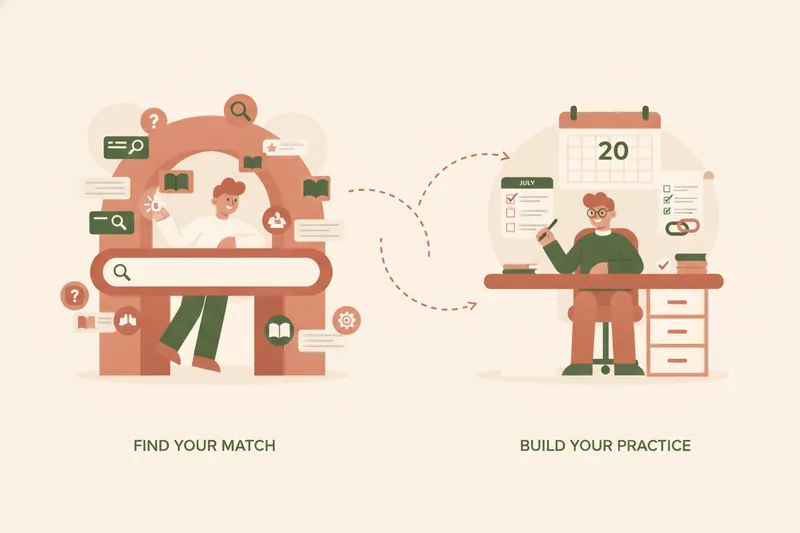
This is the distinction the rest of this guide builds on, so it's worth stating plainly. A tutoring marketplace exists to connect students with a pool of available tutors — think of it as a matchmaking layer with built-in payment processing, tutor vetting, and search. You sign up, get listed, and the platform brings you students in exchange for commission fees on each booking.
Tutoring management software moves in the opposite direction. You already have the student — through referrals, your own website, word of mouth, or a marketplace profile you no longer want to depend on — and you need a place to schedule lessons, keep track of what's been paid and what's owed, and hand over materials and homework. There's no matching algorithm because there's nothing to match; the tutor and student relationship already exists.
The clearest signal of which category a tool belongs to is who it's built to satisfy first. Marketplaces optimize for student discovery and platform trust. Management tools optimize for the independent tutor's daily operations — often through a student portal where the learner can check their schedule, balance, and materials without a back-and-forth of messages. If a platform's homepage talks about "find your perfect tutor," it's a marketplace. If it talks about "manage your lessons and students," it's management software.
Pricing, Fees and Commissions
The money model is where the two categories diverge most sharply, and it's the detail that catches a lot of independent tutors off guard. Marketplaces typically take a percentage of every session booked and paid through their system — this is how they fund tutor vetting, marketing, and dispute resolution. It's a reasonable trade when the platform is also bringing you students you wouldn't otherwise have. It's a much worse trade when you're using the marketplace purely as infrastructure for students you found yourself.
Management software generally works differently: a flat subscription (or no fee at all for a tutor operating solo), with students paying the tutor directly — bank transfer, cash, whatever arrangement they already use. There's no commission to negotiate under this no-commission model, because the platform was never in the payment chain to begin with.
That said, "no commission" doesn't mean "no tracking." A tutor still needs to know how many lessons a student has paid for, how many are already scheduled, and how many remain. This is where a ledger comes in — a running record of paid, planned, and used lessons per student, distinct from a payment processor. Umvelo's ledger works this way: when a student pays a teacher directly, the student marks the payment and attaches a receipt, the teacher confirms it, and the balance updates to reflect what's paid, what's planned against upcoming lessons, and what's still available. The platform never touches or holds the money — it just keeps the paid/planned/free lesson balance accurate so nobody has to reconstruct it from a spreadsheet or a chat history at the end of the month.
Free vs. Paid Tutoring Platforms
"Free tutoring platform" means something different depending on which category you're looking at, and it's worth separating the two before you start comparing prices. On the marketplace side, free usually means free for the student — a free tutoring platform like Schoolhouse.world connects learners with volunteer tutors at no cost to either side, funded as a nonprofit rather than through commissions or subscriptions. It's a genuinely different model from a paid marketplace, built around volunteering rather than running a paid practice.
On the management-software side, "free" more often shows up as a mode rather than a pricing tier. Some tools, including Umvelo, offer a lessons only mode where the platform tracks scheduling and materials but no amounts at all — useful for tutors who don't charge per lesson (family arrangements, volunteer teaching, informal exchanges) or who simply handle money entirely outside any software. It's not a stripped-down trial; it's a legitimate way to use the same scheduling and materials tools without a payment layer attached.
Features to Look for in a Tutoring Management Platform
Once you've decided you need management software rather than a marketplace listing, the feature list to evaluate looks quite different from what a marketplace comparison would emphasize. Here's what actually matters for running a practice day to day.
Scheduling and rescheduling
Lesson scheduling and rescheduling should work from both sides without turning into a message thread. A tutor plans lessons on a calendar; when a student needs to move a session, they should be able to request that from their own portal, and the tutor should be able to accept it with one action while both calendars stay in sync. If reschedules still require a manual "does this time work" exchange in chat, the tool isn't actually saving you anything.
Payments and balance tracking
Look for payment/balance tracking with receipts rather than payment processing. You want visibility into what a student owes, what they've paid, and how many lessons that covers — plus a receipt trail for your own records — without the platform inserting itself as a payment processor and taking a cut. This matters even more for tutors running lesson packages (say, a block of 10 sessions) where balances need to decrease predictably as lessons happen.
Materials, homework and grades
Materials should attach to a specific lesson, not float in a shared folder the student has to hunt through. A well-built student portal shows the right files, links, and homework tied to each session, visible only to the students they're meant for — which matters for group classes where different students may be at different points. Grades or progress notes attached to the same lesson give both tutor and student a record over time, useful for exam-prep contexts where progress needs to be shown to a parent or the student themselves.
Beyond these three, two more features are worth checking for if your students are younger, less tech-comfortable, or simply prefer messaging apps: Telegram bot integration, which lets students check their schedule, materials, and balance and send requests without leaving Telegram, and a personal mini-site / landing page — a simple page on your own subdomain where new students can find you and submit a request, rather than relying entirely on referrals or a marketplace profile.
Top Tutoring Platforms Compared
Tutoring marketplaces (find-a-tutor)
Tutor.com, Varsity Tutors, TutorMe, Wyzant, and iTutor are all variations on the same model: a directory of tutors, a matching or search mechanism for students, built-in payment processing, and a commission taken from each booked session. They differ in subject focus, vetting process, and pricing structure, but structurally they're the same category — useful if your goal is to be discovered by students you don't already have. Schoolhouse.world is the free outlier here: a nonprofit peer-tutoring marketplace with no fees on either side, built for volunteer-style tutoring rather than a paid independent practice.
Tutoring management software (run-your-practice)
This is a smaller, less-searched category, and Umvelo is built specifically for it. Rather than listing tutors for students to browse, it gives a tutor who already has students a single place for scheduling and rescheduling, a ledger for lesson packages and balances (with receipts, since students pay the tutor directly and Umvelo never processes the money), and materials and homework attached to individual lessons. The student side is a portal — plus optional Telegram bot access — where students see their own schedule, balance, and materials without needing to message the tutor for basic updates. Tutors can also publish a personal mini-site on their own subdomain to receive requests from new students directly, which is closer to what a marketplace profile does, but without the commission or the shared pool of competing tutors.
The practical takeaway: marketplaces and management software aren't competitors trying to win the same comparison — they answer different questions. "Where do I find students" and "how do I run things once I have them" are separate problems, and it's worth choosing tools for each one rather than expecting one platform to do both well.
How to Choose the Right Tutoring Platform for Your Practice
Start with where your students actually come from. If you're relying on a marketplace to bring you new students regularly, you likely need to stay there, commission and all — that's the cost of the lead generation. But if most of your students already come from referrals, your own reputation, or a marketplace profile you're paying commission on out of habit rather than necessity, management software is the more relevant category to evaluate.
From there, match the tool to your teaching setup. An independent tutor running one-to-one lessons mainly needs solid scheduling, a simple ledger, and a way to send materials without email attachments piling up. A teacher running small groups needs materials and homework that can be scoped to specific students within a group, so not everyone sees the same files regardless of their level. An exam-prep instructor benefits most from lesson-linked progress and grade tracking that a parent or student can review over time, since exam prep is often judged by visible progress rather than just attendance.
Whatever the setup, most management tools in this category — including Umvelo — aren't self-serve signups. Access typically starts with an onboarding / request access step where a manager sets up the account, which is worth planning for rather than expecting an instant account creation like a marketplace signup.
FAQ
Can I tutor without a license or certification? In most places, informal or independent tutoring doesn't require a teaching license — it's a private arrangement between you and the student (or their parent). Some marketplaces run their own vetting or require credentials to be listed; that's a platform policy, not a legal requirement to tutor. If you're tutoring for exam prep or through a school-affiliated program, check that program's specific requirements, since they can differ from general independent tutoring.
Do tutoring platforms take a commission on lessons? Marketplaces like Tutor.com, Varsity Tutors, TutorMe, Wyzant, and iTutor generally do — they take a percentage of each booked session because they're also responsible for bringing you the student and processing the payment. Management software typically doesn't, because it isn't part of the payment flow; the student pays the tutor directly, and the software only tracks the ledger of what's been paid and what's owed.
What's the real difference between a marketplace and management software? A marketplace connects a student to a tutor they don't already know and charges for that introduction, usually via commission. Management software assumes the tutor-student relationship already exists and provides scheduling, balance tracking, and materials delivery for it — with no matching function and, typically, no commission.
Can I run my tutoring practice on a free platform? It depends what "run" means. Schoolhouse.world is genuinely free for volunteer-style peer tutoring with no fees on either side. For a paid independent practice, many management tools offer a lessons only mode that tracks scheduling and materials without any payment amounts, which works if you handle money entirely outside the software — but tracking paid lesson packages and balances usually requires the paid tier of a management tool rather than a fully free option.
If spreadsheets and scattered chat threads are the main thing standing between you and a calmer teaching practice, see how Umvelo works as a commission-free scheduling, ledger, and materials hub — request access and get onboarded by a manager.