TEFL Resources for Teachers: Types and Uses
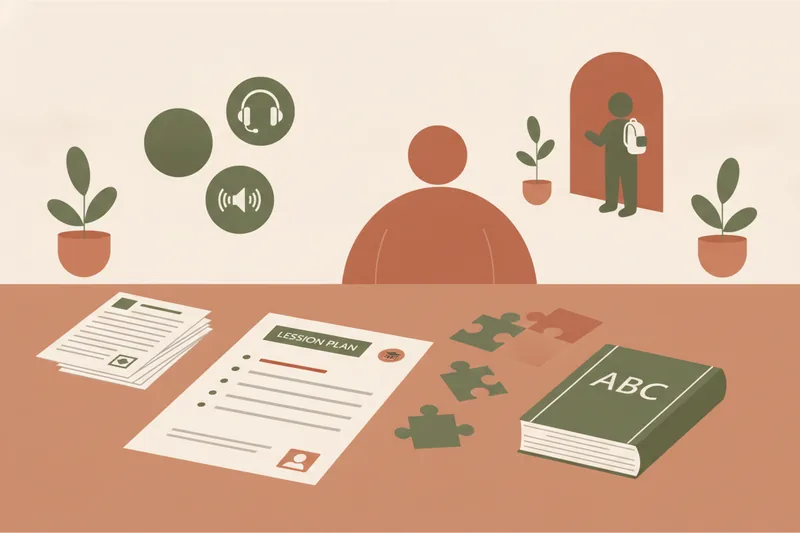
TEFL resources are the materials, tools, and reference sources a teacher draws on to plan and run English lessons, and they split into four practical categories: planning tools that shape what a lesson covers, materials that students actually use (worksheets, games, listening clips), platforms that organize or deliver teaching online, and reference sources teachers and students consult for grammar or vocabulary questions. Knowing which category a resource belongs to, rather than just bookmarking anything labeled "TEFL," is what lets a teacher pick the right thing for a given lesson instead of collecting links that overlap or go unused.
What Counts as a TEFL Resource
A TEFL resource is anything that supports the work of teaching English as a foreign language outside the teacher's own knowledge and improvisation. That's a broad definition on purpose, because the category covers very different kinds of things.
Planning tools help a teacher decide what a lesson will contain: a syllabus template, a lesson-plan framework, or a bank of activity ideas organized by level or skill. Materials are what the student interacts with directly — a worksheet, a set of flashcards, a recording. Platforms are the software layer that organizes or delivers teaching, and they vary in what they actually do: some are built mainly for scheduling, while others also give students their own login to check assignments or see how a course is progressing, not just something the teacher manages from their side. Reference sources are the grammar explanations, usage notes, and dictionaries that settle a specific question when it comes up, for the teacher or the student.
None of these four replace the others. A planning tool without materials is an empty plan; materials without a reference source behind them risk teaching a rule inconsistently.
How These Resources Fit Into Lesson Preparation and Delivery
Each category does a different job at a different point in the teaching cycle, and the mismatch that causes the most wasted time is using a resource for a job it wasn't built for.
Planning tools do their work before the lesson. Their role is to turn a learning goal — past tense narration, airport vocabulary, a speaking-exam task — into a sequence of activities with a sensible shape: warm-up, input, practice, production. A good plan references which materials it needs at each stage, but it isn't itself a worksheet or a game.
Materials carry the role of delivery: they're what actually gets put in front of the student, in the lesson or as homework afterward. This is where lesson content becomes concrete — a specific text to read, a specific set of items to practice.
Reference sources work differently again, because they're consulted in the moment rather than prepared in advance. A teacher reaches for a grammar reference when a student asks why a sentence is wrong and the explanation needs to be precise rather than improvised; a student reaches for one independently when checking a usage point at home. Treating a reference source as a lesson plan, or a worksheet as a grammar explanation, is usually where the category confusion starts.
What Each Type of Resource Looks Like in Practice
Printable and worksheet materials
ESL worksheets are the most familiar material type: a page of gap-fills, matching exercises, or short writing prompts tied to a grammar point or topic. Free printable materials cover the same ground but are typically generic — built for a broad level and topic rather than a specific student. Flashcards sit in the same family and are mainly used for vocabulary: single words or phrases paired with an image, translation, or definition, useful for drilling and spaced review rather than for teaching a concept from scratch.
Interactive and digital tools
Classroom games turn practice into something with a competitive or cooperative structure — a board game adapted for verb conjugation, a guessing game for vocabulary, a quiz format for exam review. They're material in function but delivered through activity rather than a page.
Online teaching platforms and other digital tools for online teachers cover a wider range: video-call software, interactive whiteboards, quiz builders, and scheduling systems. What separates a useful one from a distraction is whether it's solving an actual logistics or delivery problem the teacher has, rather than adding another login to manage.
Reference and grammar resources
Grammar reference sites and vocabulary references give the authoritative explanation behind a rule — tense usage, preposition choice, word collocations — that a worksheet only practices. Authentic listening materials, meaning recordings not produced for language learners (podcasts, news clips, interviews), serve a related but separate purpose: exposing students to real speech patterns rather than scripted, slowed-down dialogue. Exam-prep materials — past papers, band-score rubrics, timed practice tasks for IELTS, TOEFL, or Cambridge exams — are their own category because they're built around a specific test format rather than general competence.
Free Resource Sites vs. Paid TEFL Courses and Certifications
Free resource sites and paid TEFL courses solve different problems, and conflating them is a common source of frustration. A free resource site hosts individual pieces of material — worksheets, lesson plan ideas, printables — that a teacher pulls from as needed. There's no sequencing or guarantee of quality across the site; usefulness depends entirely on whether a given item fits the lesson at hand.
A TEFL course or certification program is structured differently: it's a sequenced curriculum, usually assessed, meant to build or validate a teacher's own skills rather than hand them lesson content. The two aren't substitutes. A certification doesn't give a teacher a stock of worksheets, and a folder of free printables doesn't teach someone how to run a classroom.
The same split shows up on the platform side. Online teaching setups generally fall into two kinds: marketplaces, where a tutor builds a profile and essentially runs their own small practice, and structured course platforms with a fixed curriculum the student works through. Free resource sites function closer to the first model — loose, self-assembled — while paid courses and certifications function closer to the second, with a defined path and an endpoint. Neither is inherently better; they answer different needs, and a teacher's budget and stage of practice usually decide which one is worth paying for.
When Generic Resources Stop Being Enough
Generic worksheets are built to apply to as many students as possible, which means they're also built to fit none of them exactly. That's fine for an early lesson with a new student or for filling five minutes of practice. It stops being enough once a teacher needs materials that match a specific student's errors, interests, or pace — at that point, a generic worksheet either covers ground the student has already mastered or skips the exact point they're stuck on.
Exam-specific adaptation is the clearest case. IELTS and Cambridge exams, for instance, score against particular criteria and task formats; a general grammar worksheet doesn't train a student to manage a two-minute speaking turn or a 150-word task response under time pressure. Once exam prep is the goal, materials need to be chosen or built around that specific format rather than pulled from a general bank.
Tailored materials — adapted from a generic resource, or written for the student in front of the teacher — take more time to prepare, but they're what moves a lesson from adequate to actually useful once a student's needs get specific enough.
Common Questions About TEFL Resources
Is a free TEFL resource ever better than a paid one?
Often, yes, for the purpose it's built for: free worksheets and printables are fine for everyday practice and warm-ups. Paid resources tend to earn their cost through structure — a sequenced course, a verified certification, or exam-specific material built to match a scoring rubric — not because paid automatically means higher quality.
Where should a new tutor start?
With one planning framework and a small set of reliable materials for the levels taught most often, rather than trying to collect from every category at once. A reference source for grammar questions and a handful of worksheets or games per level is usually enough to run real lessons; breadth can be added once there's a clear sense of what gets reused.