Teaching English as a Second Language Certification Explained
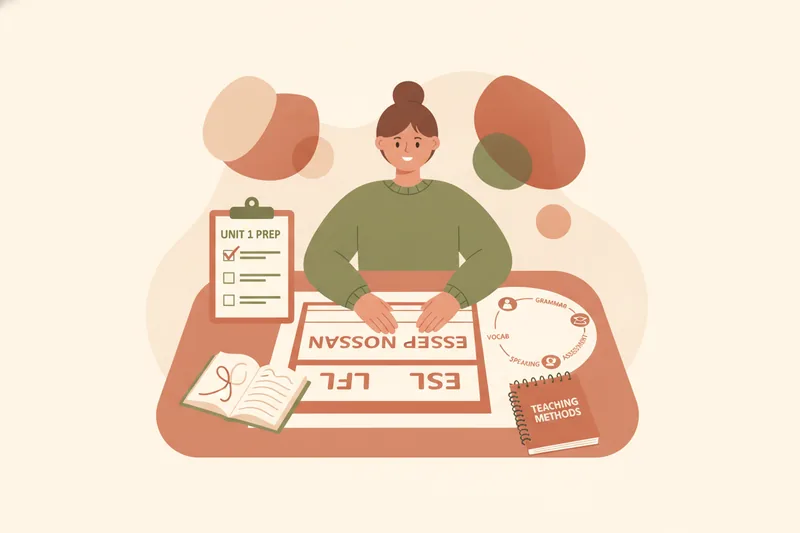
ESL teaching certification — most often called TEFL, TESOL, or TESL — is a credential that verifies you've been trained to teach English to people learning it as a non-native language. People often search for it under the broader label teaching English as a second language certification, but all three acronyms sit under that same umbrella. It does not certify that you speak English well (that's assumed), and in most places it is not a government teaching license. Which acronym you pursue matters less than where and how you plan to teach: a certificate aimed at classrooms abroad, one built for teaching speakers of other languages in general, and one tied to second-language instruction in an English-dominant country all answer slightly different questions, even when the course content overlaps heavily.
What ESL Certification Actually Verifies
An ESL certification verifies that you've completed a defined block of instruction in the specific skills needed to teach English to non-native speakers: how to present grammar to someone who didn't absorb it as a child, how to plan a lesson around a language skill rather than a subject, how to manage a classroom where the instructions themselves may be the hardest part for students to follow, and how to assess progress in listening, speaking, reading, and writing separately.
It does not verify general teaching competence the way a university education degree does, and it does not verify subject-matter mastery the way a state teaching exam does. It's closer to a specialized professional credential than a license: proof that you've studied the methodology of language teaching, not proof that you're legally authorized to teach in a school system. Employers, course platforms, and visa officers each read that proof differently, which is why the same certificate can open one door and mean nothing at another.
How the Certification Process Generally Works
Courses fall into a few broad types: in-person intensive programs run over a few weeks, fully online self-paced courses, and blended programs that combine online coursework with some in-person or supervised teaching practice. Format varies accordingly — a sustained block of instructional hours, usually followed by an assessment, with some programs also requiring observed teaching hours before the certificate is issued.
Accreditation is the part that causes the most confusion. An accrediting body reviews a course's content and structure and puts its name behind it, which is meant to signal quality control beyond the course provider's own marketing. But there's no single global authority that accredits certification the way a government accredits a medical degree, so "accredited" can mean different things depending on who did the accrediting. Training in this field doesn't come in one shape: it spans structured certificate courses, supervised practicums, and ongoing peer-based learning communities. That diversity is normal — it's also why two certificates with similar names can involve very different amounts of actual instruction.
What Certification Looks Like in Practice: Duration and Cost
Most courses are built around a minimum of 100 to 120 instructional hours, which has become the de facto baseline many employers and visa officers look for; shorter weekend courses under 60 hours exist but carry less weight. Programs that add a supervised teaching practicum typically run longer — often four to twelve weeks part-time, or about one month full-time for in-person intensives.
Cost follows the same pattern. A self-paced online course with no practicum commonly falls between $200 and $500. Programs that include tutor feedback, live sessions, or a short practicum tend to run $500 to $1,500. In-person courses with classroom teaching practice, which are the most hands-on and usually the most respected by schools abroad, generally cost $1,000 to $3,000, depending on the country and whether housing is included.
These are general ranges drawn from how the industry prices hours and supervision, not an endorsement of any provider. The honest way to compare two options is still by what's included — total instructional hours, practicum requirements, assessment format, accreditation source — rather than by the headline price alone, since a cheap course with no practicum and an expensive one with thirty hours of observed teaching aren't really the same product.
TEFL vs TESOL vs TESL: Telling the Acronyms Apart
The three acronyms aren't interchangeable labels for the same thing, even though course marketing often treats them that way. TEFL stands for Teaching English as a Foreign Language, and it describes teaching English in a country where English isn't the dominant language — a classroom in Vietnam or Spain, for example. TESOL stands for Teaching English to Speakers of Other Languages, a broader term that covers teaching both abroad and within English-speaking countries, including to immigrants and refugees. TESL, Teaching English as a Second Language, specifically describes teaching within a country where English is the dominant language, to people who need it to function there — adult learners in the United States or Canada, for instance.
In practice, the overlap is bigger than the distinction. A certificate marketed as TEFL and one marketed as TESOL often cover nearly identical material, and plenty of employers use the terms loosely regardless of which one appears on your certificate. The practical question to ask isn't which acronym carries more prestige — it's whether the program's content and practicum match where you actually intend to teach: abroad, online, or with second-language learners living in an English-speaking country. Whichever label a program uses, what you're really evaluating is still a teaching English as a second language certification in substance, just marketed under a different name.
Where Certification Requirements Differ, and What It Doesn't Guarantee
Requirements shift depending on the setting. Teaching abroad often means a receiving country or school sets its own minimum — sometimes a bachelor's degree plus a certificate for visa purposes, sometimes neither. Teaching online usually means the platform, not a government, sets the bar, and different platforms set different minimums for certificate hours. Teaching in a public school system is a different matter entirely: that requires a state or provincial teaching credential, which involves its own licensing exams and, in most places, a degree in education — a TEFL, TESOL, or TESL certificate does not substitute for that license.
It's worth being plain about what certification doesn't do. It doesn't guarantee a job; hiring also turns on experience, location, and demand. And outside public school systems, it isn't a legal license to teach — it's a professional credential that signals training. Backgrounds among working ESL teachers vary widely: some hold a state credential, others a TEFL or TESOL certificate, others neither, building their practice instead on subject depth and classroom results. Certification is one input into that path, not the determining one.